

Knee Pain When You Walk? How the AlterG Anti-Gravity Treadmill Works at Muscle IQ in Orem
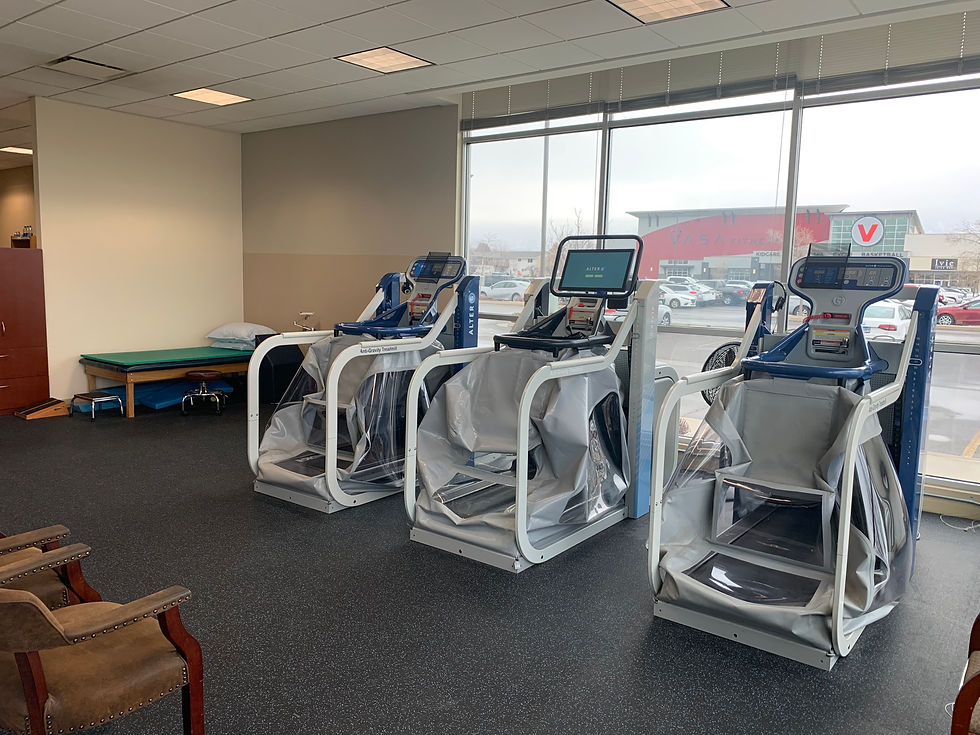
Walking has become something you plan around. Maybe it is your knee on the stairs, a hip that aches by the end of a grocery trip, or an ankle that still does not feel trustworthy months after a sprain. So you walk less.
Here is the catch. The less you walk, the weaker the muscles around that joint get, and the harder the next walk feels. Many people in Orem and across Utah County get stuck in exactly this loop. Knee pain is one of the most common reasons people visit us; see our knee pain page.
What the AlterG anti-gravity treadmill is
The AlterG is a treadmill built around a sealed air chamber. You wear special shorts that zip into the chamber, and gentle air pressure lifts you so your legs carry only part of your body weight. Your Muscle IQ therapist adjusts that amount, and a screen in front of you lets you watch your walking pattern.
The goal is simple: walk with less pain and a more normal gait, so the muscles can get back to work. You can read more about it on our AlterG treadmill page.
Why lighter steps can help a painful joint
Pain turns the muscle tone dial down. When a knee or hip hurts, your nervous system holds back the muscles around it, and a muscle that is turned down cannot protect the joint. The joint takes more strain, and that can keep the pain going.
Less weight on the joint can mean less pain during each step. That gives the muscles a better chance to switch back on. This is our working explanation, and it is worth being clear about its limits: the studies below measured walking and pain, not muscle shutdown directly.
What the research shows
A 2024 systematic review pulled together 11 studies, involving 386 people, who used anti-gravity treadmills after surgery, fractures, and other lower-body injuries. The studies found the treadmill safe and well tolerated. The review did not find proof that it works better than conventional rehabilitation.
A 2026 small pilot trial followed 49 adults over 50 with knee osteoarthritis (wear-and-tear arthritis) for eight weeks. The group that walked on an anti-gravity treadmill reported less knee pain and walked about 59 meters farther in a six-minute walking test. A group that walked in a pool and a comparison group did not show the same change.
Honest limits matter here. These studies were small, used different methods, and the knee trial lasted only eight weeks. Nothing so far proves the AlterG beats regular rehabilitation, or that gains last for years. What it does suggest is that this kind of walking is safe and may help some people with knee pain walk more comfortably while they build back up.
Who may benefit
If you live in Orem, Provo, Lehi, or anywhere in Utah County, you may be wondering whether this is for you. People come to Muscle IQ with low back, hip, knee, ankle, and foot pain. Your therapist may use the AlterG when walking is painful or hard to tolerate, for example while recovering from a joint replacement, an injury, or a car accident, or when balance is a concern. Whether it fits you depends on your evaluation. Runners and athletes sometimes use it to keep up their fitness while an injury settles.
Not sure whether walking is the right next step for your knee or hip? Call us at (801) 310-0851 and we will help you sort it out.
Where it fits in your care
The treadmill is one tool, not the plan. At Muscle IQ, the plan starts with a thorough evaluation, including strength testing to find which muscles are turned down and why. The AlterG is used when that evaluation says walking is the right way to retrain them.
The outcome we aim for is pain-free walking, back to your active life. If walking has become something you dread, we can help you understand what is behind it and build a plan to get you moving again.
Call Muscle IQ at (801) 310-0851 to schedule your first appointment and find out what is behind your walking pain.
Learn more at MuscleIQ.com.


Comments