

Migraines and Headaches: Why Muscle IQ in Orem Looks at the Neck and the Nervous System

The headache starts at the base of your skull on a long workday. By evening the light over the kitchen table feels too bright, and you are counting the hours until you can lie down in a dark room. You have tried a new pillow, more water, less screen time. The headaches still come back.
If that sounds familiar, there is good news for people in Orem and across Utah County: headaches are not always only a head problem. For many people, the neck and the nervous system are part of the story, and both can be evaluated.
Your nervous system has a pain volume dial
Your brain does not simply receive pain. It adjusts it. A network that runs from the brain through the brainstem down to the spinal cord can turn incoming pain signals down, or turn them up, before you ever feel them.
Steady stress, poor sleep and long-lasting pain can shift that network toward turning pain up. The same neck tension that once felt like a mild ache can start to feel like a pounding headache.
This is one reason headaches can seem to have a mind of their own. The tissue may not have changed much. The volume setting has.
Why light can feel so harsh during a migraine
Light sensitivity is one of the most frustrating parts of a migraine. In one small brain-imaging study of eight people, ordinary dim light lit up the brain's vision center during migraine attacks and after the headache was relieved, but not between attacks. The researchers suggested the brainstem helps control how sensitive the brain is to light.
In plain terms: the light did not change. The state of the nervous system did. It is a small study, so it is a clue rather than the final word, but it suggests the state of your nervous system can change how strongly you feel things.
We wrote more about the neck and light sensitivity in Whiplash Headaches and Light Sensitivity: The Neck Connection.
Where the neck fits in
Muscle IQ's headaches and migraines page names some of the most common starting points: car accidents, a pillow that does not support you, and long stretches of reading or computer work with your head pushed forward.
Pain changes muscle function. It can switch neck muscles off, so neighboring muscles have to overwork to hold up your head. Overworked tissue can become irritated, and irritated tissue is one more source of signals your nervous system has to process. If that system is already turned up by stress or poor sleep, those signals may feel louder.
So the neck can be part of a headache in two ways: as a source of irritation, and as one more input to a nervous system that is already on edge. Pain causes muscle weakness, and muscle weakness causes pain. For the everyday version of this cycle, see Tension Headaches: Why They Start in Your Neck and Shoulders.
What Muscle IQ checks
A thorough evaluation comes first. At Muscle IQ in Orem, that includes:
How your neck moves and how you hold your posture
The strength of your neck muscles
The strength of the muscles that move your eyes
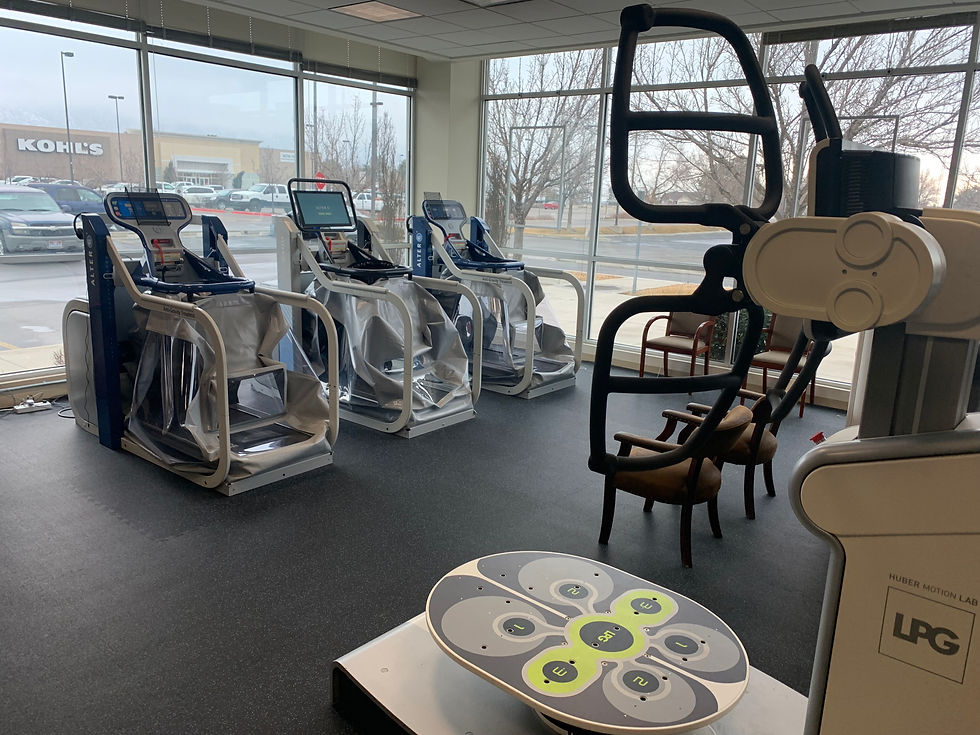
Hands-on treatment (a method called the Fascial Distortion Model) can begin on the first visit, and some people notice a change right away. For neck strength, Muscle IQ uses computerized David machines that measure strength and range of motion against people of your age, sex, height and weight, then retest over time so you can see progress in numbers. You can read more on the neck pain page.
If you want a deeper look at why the exact spot matters, see Migraines, the Neck, and Why the Exact Spot Matters.
When to see your doctor first
Not every headache belongs in a physical therapy clinic. A sudden, severe headache, a headache after a blow to the head, or a headache with fever, vision changes, confusion or new weakness needs a physician right away. Physical therapy is a partner to your medical care, not a replacement for it.
You can get better
If headaches keep returning in your neck or at the base of your skull, you do not have to simply live with them. For many people, lasting relief starts with finding the muscle weakness and irritated tissue behind the pain, and rebuilding that strength. Pain can go away. Strength is coming.
Take control of your health today by calling Muscle IQ at (801) 310-0851 to schedule your first appointment.
Learn more at MuscleIQ.com.


Comments