

Sports Injury Recovery: Getting Back Your Speed and Agility at Muscle IQ in Orem

The ankle has healed. The knee feels fine at work and around the house. Your doctor has cleared you, and you're back on the court, the field or the trail above Orem. But something is off. You're a half-step late to the ball. Cutting left feels hesitant. You don't trust the leg the way you used to.
That gap between "healed" and "back to full speed" is common, and it usually isn't about effort. It's about how your nervous system is running the muscles.
Strength Is a Number. Speed and Agility Are Control.
After an injury, your nervous system protects the area by turning down the "dial" that controls how hard your muscles work. Muscles that should fire fast and strong can respond slower and weaker. The Muscle IQ sports injuries page puts it simply: muscles may not fire as well as they did before the injury, and that can lead to reinjury and lower performance.
Here's the tricky part. Strength can come back before control does. In one study of athletes after ACL surgery, the thigh muscles' firing patterns still looked different up to 12 months later, even as maximal strength improved. A small study of people with an old hamstring strain found the injured side was weaker, and the weakness tracked with extra braking signals in the brain, even after the injury itself was over.
Neither study proves what's happening in your leg. But both point the same way: passing a strength test doesn't always mean your nervous system has returned to full speed.
Find the Weak Link Holding You Back
Speed and agility depend on more than muscle size. Your body has to sense where each joint is, react to what's happening around you, and correct small errors in a split second. Pain changes muscle function, and it can blur that sense of position, too. When the signal from a joint drifts, the compensated movement can feel normal from the inside.
That's why Muscle IQ starts with testing. Testing looks for muscles that aren't firing as well as they did before the injury, and treatment works on turning them back on. If you've been cleared but still feel a step slow, call (801) 310-0851. Laser-guided training comes in once the goal shifts from "stronger" to "faster and more accurate."
Where Laser-Guided Training Fits in Getting Back to Full Speed
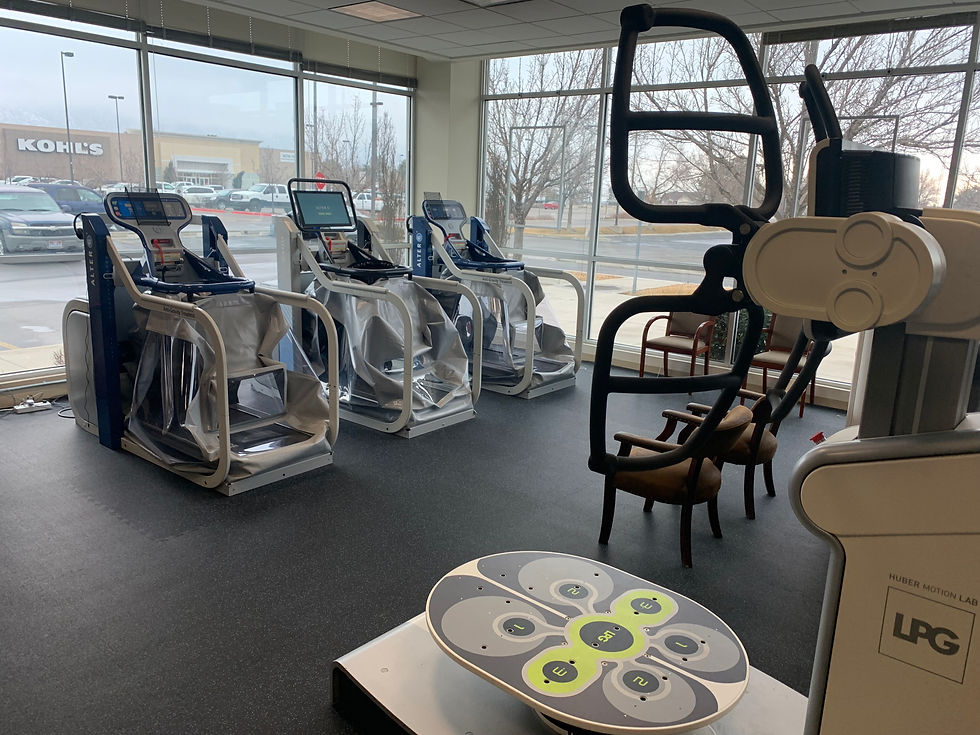
The Laser Motion Guidance system at Muscle IQ in Orem is used to help patients regain speed and agility. It pairs a laser that shows where a movement goes with a tracking grid and reaction lights that call for quick, unplanned responses.
The value is in the feedback. You can't fix an error you can't feel. A laser dot makes small drifts in movement visible right away, so your nervous system gets accurate information to correct against. Reaction lights add the part a strength test leaves out: real sport doesn't tell you what's coming next. (For more on each tool, read Why a Laser Dot Shows You What You Cannot Feel and Reaction Time After an Injury.)
What the Research Shows, and What It Doesn't
This kind of precise, feedback-driven work is called motor control exercise. It asks your brain to pay attention to accuracy, not just effort, and Muscle IQ's laser page notes it may also engage the brain's own pain-control system.
The closest study involves 31 fighter pilots with neck pain. After eight sessions of laser-guided neck exercise combined with another treatment, they had less pain and a sharper sense of head position than pilots who received no treatment. It was a small study, it looked at the neck, and it didn't measure sprint speed or cutting. No study cited here has tested laser training on athletic agility directly. So it's used as one tool in a larger plan, not a shortcut.
Built for a Full Return, Not Temporary Relief
Laser-guided training is one part of the Muscle IQ approach, along with hands-on treatment, strength testing, and the clinic's three AlterG anti-gravity treadmills for running with less load while an injury recovers. The goal is simple. Get the muscles turned back on, then get them working fast and accurate again, so you're back to your sport with confidence. Muscle IQ also works alongside sports medicine doctors, so your care fits the plan your doctor has already started.
Cleared but still not back to full speed? That gap can be tested, and testing early means you're not guessing about what's still holding you back. Muscle IQ is helping athletes and active adults across Utah County move with confidence again.
Take control of your health today by calling Muscle IQ at (801) 310-0851 to schedule your first appointment.
Learn more at MuscleIQ.com.


Comments