

Motor Units After ACL — Why Your Knee Can Test Strong and Still Not Feel Ready
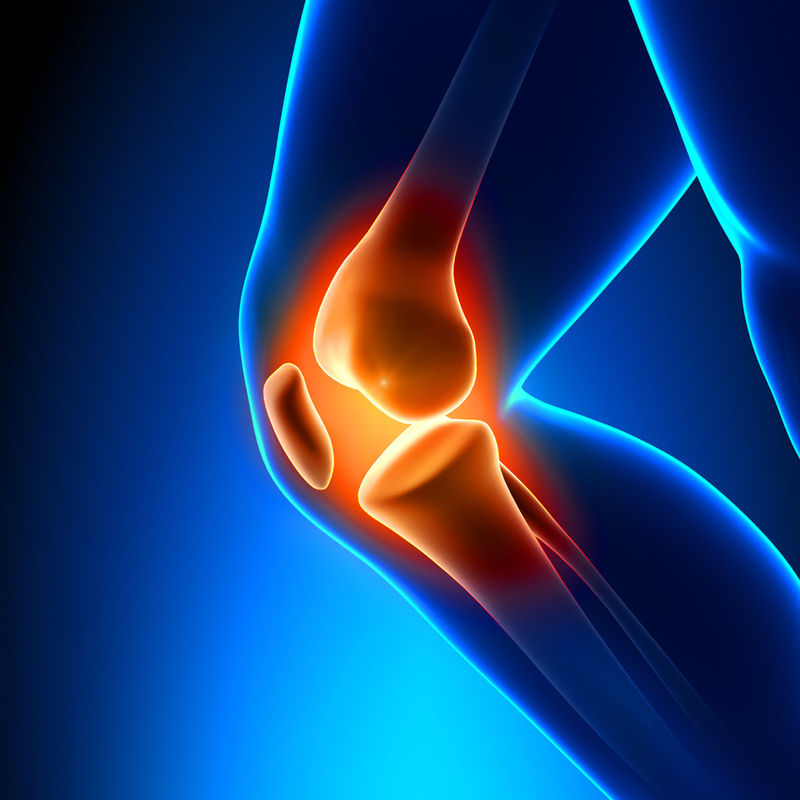
The surgery is behind you. The swelling is down, the scar has faded, and at your last check the knee tested strong — close to even with the other side. On paper, you passed. So why does cutting on a field in Orem still feel a half-second late? Why does coming down a flight of stairs take more attention than it should?
If that sounds familiar, the problem may not be how much strength you have. It may be how your muscles are being switched on.
Strength Is a Number. Control Is a Pattern.
When a knee is tested for strength, the question is simple: how much force can the muscle produce? That number matters, and it can recover nicely after an ACL injury and reconstruction.
But force is only the surface. Underneath it, your quadriceps is made of hundreds of small units — a nerve and the muscle fibers it drives, called a motor unit. How fast those units fire, how large they are, and the order in which they switch on is what turns raw force into smooth, reliable, well-timed movement. A strength test does not see any of that. It only sees the total.
That gap is where a lot of ACL knees get stuck. The strength comes back, so everyone assumes the knee is ready — while the control quietly stays behind.
What the Research Found
A 2022 study in the European Journal of Sport Science looked directly at this. Researchers used a technique that reads the behavior of individual motor units, then compared ACL-injured athletes to healthy ones and tracked them through recovery.
The quadriceps of the injured leg showed a lower average firing rate and smaller motor units than a healthy leg. The hamstrings, meanwhile, ramped up — a compensation pattern, one muscle group working differently to cover for another. Here is the part that matters most for you: these motor-unit differences could persist up to twelve months after surgery, even as maximal strength improved.
This is one study with a modest group of athletes, so the exact numbers may not fit every knee. But the pattern it points to is consistent with what we often see: the force can normalize while the wiring underneath is still catching up. Strength alone can mask it.
Why This Happens — The Muscle Tone Dial
This does not mean the muscle itself has failed. More often, the recovering knee is still sending signals — from the surgery, the lingering swelling, and the irritated tissue around the joint — and those signals turn the muscle down.
We often describe it as a muscle tone dial. Pain, swelling, and injury signals from the healing knee can turn that dial down, so the muscle contracts later and less completely than it should. The tissue that is still healing is what drives that — it is not that the muscle is on its own and the nervous system is simply being stubborn; the injured joint and the turned-down muscle are two ends of the same loop. This is one form of what is called muscle inhibition — the muscle is capable, but it is not being fully invited to the party. When the quad stays partly offline, nearby muscles compensate, and the whole pattern of movement drifts, even after a scan looks clean and a strength test looks fine. You can read more about that mechanism on our muscle inhibition page.
What This Means for Your Recovery
The lesson is not that strength testing is useless — it is that a strength number, by itself, is not the finish line. A knee can look strong and still move wrong.
This is why a thorough evaluation looks past the single number. At Muscle IQ Physical Therapy in Orem, part of what we do is test how well a muscle actually switches on — not just how hard it can push on one rep. When we find a muscle that is being held back, the goal is to restore the signal, not just pile on more load. Rebuilding control often means adding reactive, balance, and timing work later in recovery, not only lifting to a target weight.
Think of it as the difference between an engine that revs and a car that drives well. You want both. An MRI helps the surgeon repair the structure; muscle testing helps the physical therapist find where the strength is leaking out afterward. The two work together — and often that muscle testing is what stands between "looks recovered" and "feels like yours again."
If your knee tested strong but still does not trust itself on stairs, a trail, or a court in Utah County, that is worth a closer look. The sooner the real gap is found, the sooner it can close.
Take control of your health today by calling Muscle IQ at (801) 310-0851 to schedule your first appointment.
Learn more at MuscleIQ.com.


Comments